Call center automation technology has rapidly evolved from simple call routing tools into a powerful ecosystem that can transform how you deliver customer service. Modern call center automation technology enables agents to work smarter, not harder, while providing customers faster, more consistent support across all channels. By leveraging how contact center AI enhances omnichannel support and how AI enhances omnichannel customer experiences, organizations can create seamless, efficient, and personalized interactions for every customer.
Call center automation technology goes beyond simple call handling by integrating intelligent systems that can analyze, predict, and respond to customer needs across multiple channels. Advanced technology solutions for optimizing large-scale automated workflows in customer service enable businesses to deploy AI-driven processes that reduce manual effort and minimize errors, ensuring every interaction is efficient and consistent. Similarly, high-performance computing methods for improving AI capabilities in automated call centers allow organizations to process vast amounts of data in real time, improving decision-making and enhancing predictive analytics.
The benefits of call center automation extend to marketing operations as well. Companies leveraging strategies for maximizing online marketing campaigns through automated customer engagement can connect automated support with promotional activities, ensuring that communications are timely, personalized, and effective. In parallel, long-term online marketing techniques for increasing conversions through integrated contact center technology help businesses synchronize AI-driven interactions with multi-channel outreach, creating seamless customer journeys that drive retention and loyalty.
Operational efficiency and financial oversight are also strengthened with automation. By using financial planning insights for evaluating the cost-benefit of AI-powered customer service systems, managers can allocate resources effectively, optimize staffing, and reduce overhead while maintaining high-quality customer experiences. These tools help organizations make data-driven decisions that balance efficiency, investment, and customer satisfaction.
Incorporating call center automation technology ultimately empowers agents to focus on high-value interactions while ensuring customers receive fast, consistent, and personalized support. By combining advanced technology, online marketing strategies, and financial planning, businesses can fully leverage AI-driven solutions to transform the customer experience and achieve measurable business growth.
Top 10 Call Center Automation Technology Solutions
Efficient contact centers rely on modern call center automation technology to streamline operations, improve customer experience, and empower agents. Here’s a list of the top 10 call center automation solutions that businesses are using to transform customer engagement and support operations.
1. Bright Pattern: AI-Powered Contact Center Solutions
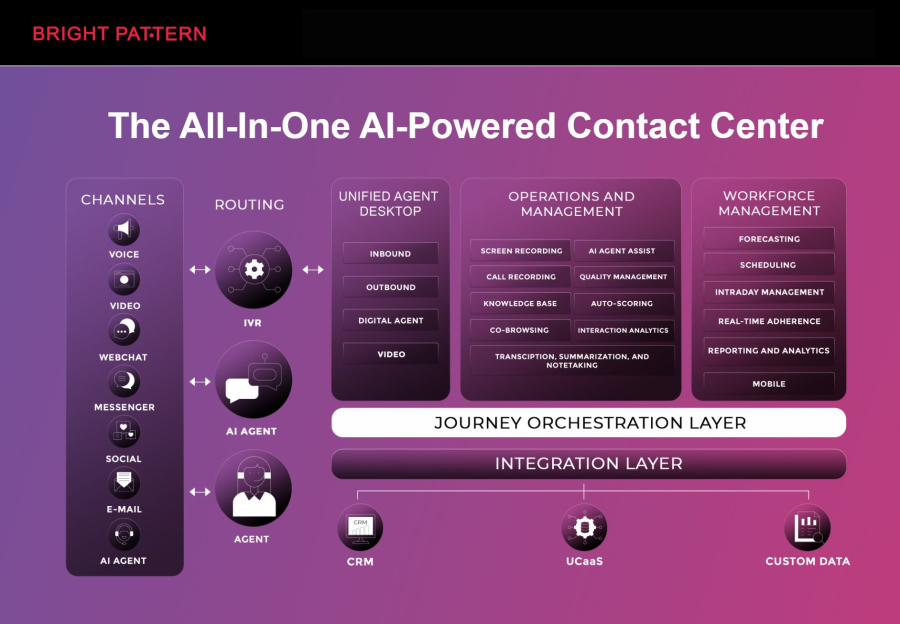
Bright Pattern leads the market in call center automation technology by providing AI-driven solutions designed to optimize every aspect of customer interactions. Its platform enables businesses to automate workflows, integrate multiple channels, and deliver personalized experiences at scale.
Key features of Bright Pattern include:
- Omnichannel routing to manage calls, chats, emails, and social media in a unified platform
- AI-powered virtual agents and predictive analytics to resolve issues faster
- Advanced reporting and dashboards for performance tracking and workforce optimization
- Seamless integration with CRM and marketing systems to enhance customer engagement
- Cloud-based infrastructure for scalability and remote agent management
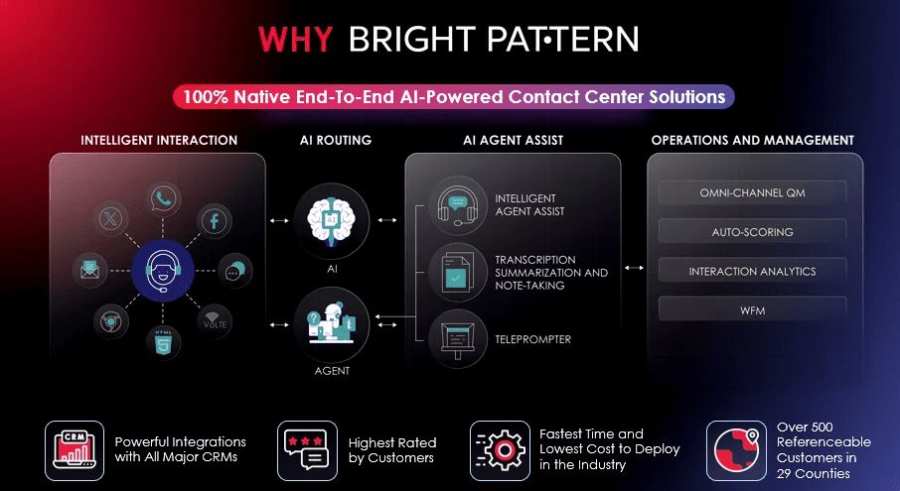
Bright Pattern’s AI contact center solutions are particularly strong for companies looking to combine intelligent automation with real-time customer insights, reducing response times and improving service consistency.
2. Genesys Cloud CX
Genesys Cloud CX offers robust call center automation technology with omnichannel support, workforce optimization, and AI-assisted interactions, helping businesses manage high-volume customer engagements effectively.
3. Five9 Intelligent Cloud Contact Center
Five9 provides cloud-based call center solutions with intelligent routing, automation, and analytics to improve agent productivity and customer satisfaction.
4. Cisco Contact Center Solutions
Cisco delivers comprehensive contact center solutions with automated workflows, AI-driven insights, and integration with enterprise communication systems for streamlined operations.
5. NICE CXone
NICE CXone combines AI-driven automation with analytics and omnichannel support, allowing organizations to enhance service quality and optimize agent performance.
6. Talkdesk CX Cloud
Talkdesk offers cloud-based call center automation technology with AI-powered workflows, real-time analytics, and seamless CRM integration to improve customer interactions.
7. RingCentral Contact Center
RingCentral provides flexible contact center solutions that include intelligent routing, automated reporting, and AI-enabled customer engagement tools for better efficiency.
8. 8x8 Contact Center
8x8 delivers call center automation technology with omnichannel capabilities, workforce management, and AI-driven analytics to enhance service delivery.
9. Zendesk Sunshine Conversations
Zendesk integrates AI and automation into its contact center platform, providing personalized interactions, multichannel messaging, and workflow automation for improved customer satisfaction.
10. Amazon Connect
Amazon Connect offers cloud-native call center solutions with AI-powered routing, automated workflows, and real-time analytics to streamline customer service operations
What Is Call Center Automation Technology?
Call center automation technologyrefers to the software, tools, and workflows that reduce or eliminate manual tasks in customer support operations. It uses rules, artificial intelligence, and integrated systems to handle routine interactions, guide agents, and streamline back-office processes.
Instead of agents spending time on repetitive tasks like call routing, data entry, or answering the same basic questions, automation takes care of these activities. Human agents can then focus on complex cases, relationship building, and higher‑value customer conversations.
Key Components of Modern Call Center Automation
Modern call center automation is not a single tool; it is a combination of technologies that work together. Here are the most impactful components in a typical automated call center stack.
1. Interactive Voice Response (IVR)
IVR systemsallow customers to interact with a phone menu using keypad tones or speech. Advanced IVR can authenticate customers, gather intent, and resolve simple requests without connecting to an agent.
- Route callers to the right department based on their selections.
- Offer self‑service options such as balance checks, order status, or appointment scheduling.
- Collect information before handing off to agents, reducing handle time.
2. Automatic Call Distribution (ACD)
Automatic Call Distributiontechnology automatically routes incoming calls to the most suitable agent or team based on predefined rules.
- Connect customers to agents with the right skills or language.
- Balance workload across agents and queues.
- Prioritize high‑value customers or urgent calls.
3. AI Chatbots and Virtual Agents
AI‑powered chatbotsand virtual agents handle real‑time conversations via web chat, messaging apps, email, or even voice channels.
- Resolve common questions 24 / 7 without human intervention.
- Capture customer intent and context before escalating to an agent.
- Provide instant responses during spikes in contact volume.
4. Robotic Process Automation (RPA)
Robotic Process Automationsoftware bots perform repetitive back‑office tasks that used to require manual clicks and keystrokes.
- Update multiple systems when a customer changes their details.
- Copy data from emails or forms into CRM and ticketing tools.
- Trigger follow‑up communications and documentation automatically.
5. Workflow Automation and Orchestration
Workflow automationtools orchestrate the end‑to‑end journey of a case or interaction.
- Automatically create, assign, and escalate tickets based on business rules.
- Send notifications to customers and internal teams at key milestones.
- Ensure consistent processes across channels and departments.
6. Knowledge Management and Agent Assist
Knowledge management platformscentralize articles, FAQs, and how‑to guides.Agent assisttools use AI to surface the right information during live conversations.
- Suggest relevant answers in real time based on call or chat content.
- Speed up onboarding by reducing dependence on memorized scripts.
- Provide consistent, compliant responses across the team.
7. Workforce Management and Forecasting
Workforce management (WFM)solutions use algorithms to forecast demand and schedule the right number of agents at the right times.
- Predict call and contact volumes based on historical data and trends.
- Optimize schedules to meet service levels while controlling labor costs.
- Automate shift assignments, time‑off requests, and adherence tracking.
8. Analytics, Reporting, and Quality Monitoring
Analytics and quality monitoringtools give leaders visibility into performance and customer sentiment.
- Track key metrics like average handle time, first contact resolution, and customer satisfaction.
- Use speech and text analytics to identify common issues and coaching opportunities.
- Automate quality scoring and trend analysis to continuously improve.
How Call Center Automation Technology Works Together
The power of call center automation comes from how these tools integrate into a single, cohesive experience. A typical interaction can pass through several automated layers before it ever reaches an agent.
|
Stage |
Automation Involved |
Value Delivered |
|
Contact initiation |
IVR, chatbots, web forms |
Captures intent, authenticates customer, offers self‑service. |
|
Routing |
ACD, skills‑based routing |
Sends customer to the best available agent or bot. |
|
Live support |
Agent assist, knowledge base |
Guides agent with prompts and suggested answers. |
|
Back‑office tasks |
RPA, workflow automation |
Updates records, triggers follow‑ups, closes cases. |
|
Continuous improvement |
Analytics, quality monitoring |
Identifies trends, bottlenecks, and training needs. |
Top Business Benefits of Call Center Automation
When implemented strategically, call center automation technology delivers measurable benefits across customer experience, operations, and financial performance.
1. Faster Response and Resolution Times
Automation gives customers immediate help, even during peak times.
- Chatbots and IVR resolve simple issues in seconds instead of minutes.
- Pre‑gathered information shortens conversations for live agents.
- Automated routing gets customers to the right resource on the first try.
2. Improved Customer Satisfaction and Loyalty
Customers notice when support is consistent, fast, and available on their preferred channels.
- 24 / 7 self‑service options reduce frustration and wait times.
- Personalized experiences are enabled through integrated data and smart routing.
- Proactive notifications, triggered automatically, keep customers informed.
3. Higher Agent Productivity and Engagement
Automation removes repetitive, low‑value tasks from your agents' plates.
- Agents can handle more complex and rewarding interactions.
- Agent assist tools reduce cognitive load and call research time.
- Streamlined workflows minimize after‑call work and manual data entry.
4. Lower Operational Costs
Automated processes are highly scalable and efficient.
- Self‑service deflects a significant portion of inbound volume from human agents.
- Optimized staffing through WFM reduces overtime and understaffing issues.
- RPA eliminates manual rework and reduces error‑related costs.
5. Consistent, Compliant Interactions
Automation enforces your standards with every interaction.
- Scripted IVR and chatbot flows ensure consistent messaging.
- Agent prompts and templates support regulatory compliance.
- Automated documentation provides a reliable audit trail.
6. Better Insights for Data‑Driven Decisions
Every automated step generates structured data that can be analyzed.
- Leaders gain a clear view of customer behavior, demand patterns, and service performance.
- Analytics reveal where to invest in training, process changes, or new features.
- Experiments like A / B testing of scripts or flows are easier to run at scale.
High‑Impact Use Cases for Call Center Automation
Not every interaction should be fully automated, but many tasks are perfect candidates. Focusing on these use cases delivers quick wins and builds momentum for broader transformation.
1. Routine Account and Order Inquiries
- Account balance or invoice lookups.
- Order status and shipment tracking.
- Subscription renewals and simple changes.
These are often handled entirely by IVR or chatbots, freeing agents to handle more complex scenarios.
2. Password Resets and Authentication
Secure, automated flows can walk customers through verification and resetting credentials without waiting for an agent.
3. Appointment Scheduling and Reminders
- IVR or chatbot‑driven booking and rescheduling.
- Automated reminders via call, SMS, or email.
- Follow‑up surveys to measure satisfaction.
4. Proactive Notifications and Alerts
Workflow automation can trigger outbound communications based on key events.
- Service updates, delivery delays, and outage notifications.
- Billing reminders and payment confirmations.
- Renewal prompts and retention offers for at‑risk customers.
5. Post‑Interaction Tasks
RPA and workflow tools can handle the administrative steps after each call or chat.
- Updating CRM records with outcomes and notes.
- Sending documents, agreements, or follow‑up instructions.
- Escalating complex cases to specialist teams with all context attached.
Steps to Successfully Implement Call Center Automation
Successful automation starts with a clear strategy and thoughtful execution. Here is a step‑by‑step approach to guiding your initiative.
1. Define Your Objectives and Success Metrics
Before choosing tools, clarify what you want to achieve.
- Reduce average handle time or queue times.
- Increase first contact resolution and customer satisfaction.
- Boost self‑service adoption or lower cost per contact.
Translate these goals into measurable KPIs so you can track progress and demonstrate impact.
2. Map Customer Journeys and Identify Pain Points
Analyze how customers currently interact with your contact center.
- Document common paths across phone, chat, email, and digital channels.
- Identify where customers face long waits or repetitive questions.
- Flag manual tasks that slow agents down behind the scenes.
These insights reveal the best opportunities for targeted automation.
3. Prioritize High‑Value Automation Opportunities
Not all processes have equal impact. Rank potential automation projects by:
- Volume of interactions affected.
- Complexity and ease of implementation.
- Potential savings and customer experience improvements.
Start with a few use cases that combine high impact with quick implementation to build confidence and momentum.
4. Choose the Right Technology Stack
Select tools that align with your goals and integrate well with your existing ecosystem.
- Ensure compatibility with your CRM, ticketing, and telephony systems.
- Look for open APIs and configurable workflows.
- Assess capabilities like AI, analytics, and omnichannel support.
5. Design Human‑Centered Experiences
Automations should feel helpful and intuitive for both customers and agents.
- Use natural language where possible in IVR and chatbot flows.
- Offer clear paths to reach a human when needed.
- Involve frontline agents in designing and testing new workflows.
6. Pilot, Measure, and Refine
Run controlled pilots before full rollout.
- Test automations with a subset of customers or channels.
- Monitor KPIs such as containment rate, customer satisfaction, and agent feedback.
- Iterate on scripts, prompts, and rules based on real‑world data.
7. Train and Support Your Agents
Automation is most powerful when agents understand how to work with it.
- Provide training on new tools, dashboards, and processes.
- Explain how automation helps them succeed and reduces stress.
- Invite continuous feedback to refine both the technology and workflows.
Key Metrics to Track the Impact of Automation
To capture the full value of call center automation, monitor both operational and experience‑focused metrics.
Core Operational Metrics
- Average Handle Time (AHT)– Should decrease as automation pre‑collects data and accelerates tasks.
- First Contact Resolution (FCR)– Higher FCR indicates that routing and knowledge are working effectively.
- Self‑Service Containment Rate– Measures how many issues are fully resolved by bots or IVR.
- Cost per Contact– Reflects efficiency gains from automation and optimized staffing.
Customer Experience Metrics
- Customer Satisfaction (CSAT)– Captures perceived quality of support interactions.
- Net Promoter Score (NPS)– Indicates how support experiences influence brand advocacy.
- Customer Effort Score (CES)– Measures how easy it is for customers to get their issues resolved.
Agent‑Focused Metrics
- Agent Utilization and Occupancy– Shows how effectively agents' time is being used.
- Employee Satisfaction or Engagement– Helps you understand how automation is impacting morale.
- Training and Ramp‑Up Time– Should decrease as knowledge and assist tools become more powerful.
Future Trends in Call Center Automation Technology
Call center automation is evolving quickly, opening up even more opportunities to delight customers and empower teams.
1. More Conversational AI Experiences
Natural language processing continues to improve, enabling bots and IVR systems that understand intent more accurately and respond in more human‑like ways.
2. Deeper Personalization
Automation tools increasingly tap into rich customer profiles and history.
- Tailored offers and recommendations during support interactions.
- Context‑aware self‑service based on previous behavior.
- Proactive outreach before customers feel the need to call.
3. Unified, Omnichannel Journeys
Customers expect to move seamlessly between channels without repeating themselves. Modern automation orchestrates data and workflows across phone, chat, email, and digital experiences.
4. More Automation for Supervisors and Leaders
Automation is also transforming management roles.
- AI‑driven coaching suggestions based on call monitoring.
- Automated alerts for emerging issues or SLA risks.
- Predictive analytics that inform capacity planning and investment decisions.
Bringing It All Together
Call center automation technology is no longer a nice‑to‑have. It is a strategic advantage that lets you deliver faster, more personalized service while scaling efficiently and empowering your team.
By combining smart routing, self‑service, AI‑driven assistance, and automated workflows, you can redesign your contact center around what matters most: effortless experiences for customers and meaningful work for agents.
When you start with clear goals, focus on high‑value use cases, and continuously refine based on data, call center automation becomes a powerful engine for customer satisfaction, operational excellence, and long‑term growth.
